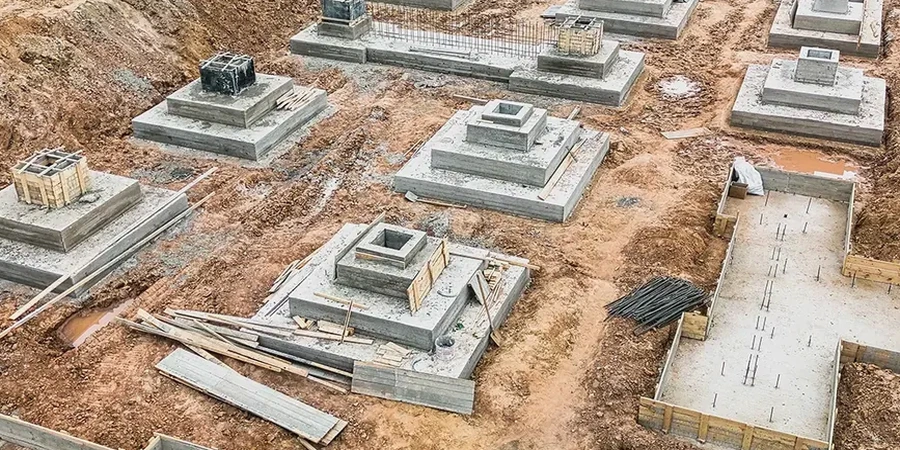
The geotechnical context for foundations in Granby, Quebec, is defined by the region’s complex Quaternary geology, primarily dominated by Champlain Sea clay deposits overlaying glacial till and fractured bedrock. These marine clays, notably the sensitive Leda clay, exhibit high void ratios and low shear strength, posing significant challenges for bearing capacity and differential settlement. Additionally, the area’s bedrock depth varies considerably, from shallow outcrops to depths exceeding 10 meters, necessitating detailed subsurface investigations. Frost penetration, reaching up to 1.8 meters in this climate, mandates rigorous frost protection measures. Groundwater tables are often elevated due to the clay’s low permeability, requiring dewatering or drainage solutions during excavation. Seismic considerations are moderate but must account for soil amplification in soft clay layers. Therefore, a comprehensive geotechnical assessment, including boreholes and laboratory testing, is essential to characterize the stratigraphy, strength parameters, and consolidation behavior, ensuring safe and economical foundation designs tailored to Granby’s unique subsurface conditions.
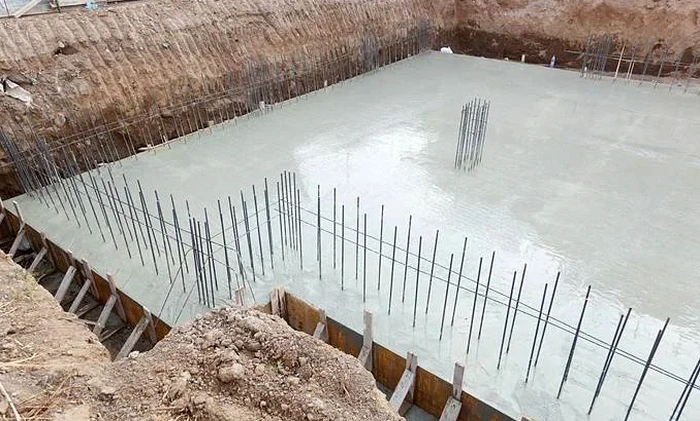
Foundation methods in Granby typically involve either shallow or deep systems, selected based on soil bearing capacity and structural loads. For competent glacial till or bedrock at shallow depths, spread footings and mat foundations are common, though rigorous excavation and compaction of engineered fill may be required. In areas underlain by soft clays, deep foundations such as driven H-piles or concrete piles are employed to transfer loads to more competent strata. Helical piers and screw piles have gained popularity for lighter structures due to their installation efficiency and minimal soil disturbance. In certain situations, ground improvement techniques like dynamic compaction or stone columns enhance clay stiffness and reduce settlement potential. Basement constructions often require waterproofing systems due to high water tables, while slab-on-grade designs demand proper capillary breaks and insulation. Each method is adapted to the site’s specific geotechnical profile, with careful monitoring during installation to verify design assumptions and ensure long-term performance.
Local foundation standards in Granby are governed by the Quebec Construction Code, which incorporates the National Building Code of Canada with provincial amendments. The code mandates minimum foundation depths of 1.8 meters below grade for frost protection in this region. For clay soils, allowable bearing pressures are typically determined through in-situ or laboratory tests, with conservative safety factors. The code references CSA standards for materials, including concrete durability in freeze-thaw cycles. Seismic design follows NBCC 2020 provisions, with site-specific soil classification to account for amplification in soft clay. Additionally, the Municipality of Granby enforces local by-laws requiring geotechnical reports for projects involving excavation below the water table or near existing structures. Strict adherence to these standards ensures structural safety and mitigates risks of foundation failure due to frost heave, settlement, or seismic events. Environmental regulations also govern excavation dewatering discharge and soil handling, aligning with provincial guidelines.
Applications of foundation designs in Granby span residential, commercial, and industrial sectors. Single-family homes commonly utilize insulated shallow foundations on compacted granular fill, often with frost-protected grade beams. Commercial buildings may require deep foundations or reinforced mats to support heavy loads on clay, with waterproofing crucial for underground parking. Industrial facilities, such as warehouses or manufacturing plants, often adopt slab-on-grade systems with pile-supported columns to resist large point loads. Infrastructure projects like bridges or retaining walls incorporate driven piles or drilled shafts, accounting for scour and lateral earth pressures. In sensitive areas near the Yamaska River or on sloping terrain, specialized solutions like soil nails or micropiles address slope stability. Agricultural structures on expansive clays use tension-resistant designs to mitigate movement. Each application integrates local soil data, snow loads, and seismic hazards, emphasizing durability and resilience. Tailored approaches ensure foundations perform reliably under Granby’s demanding environmental and geological conditions.
This service complements our laboratory testing work for a complete project analysis.